
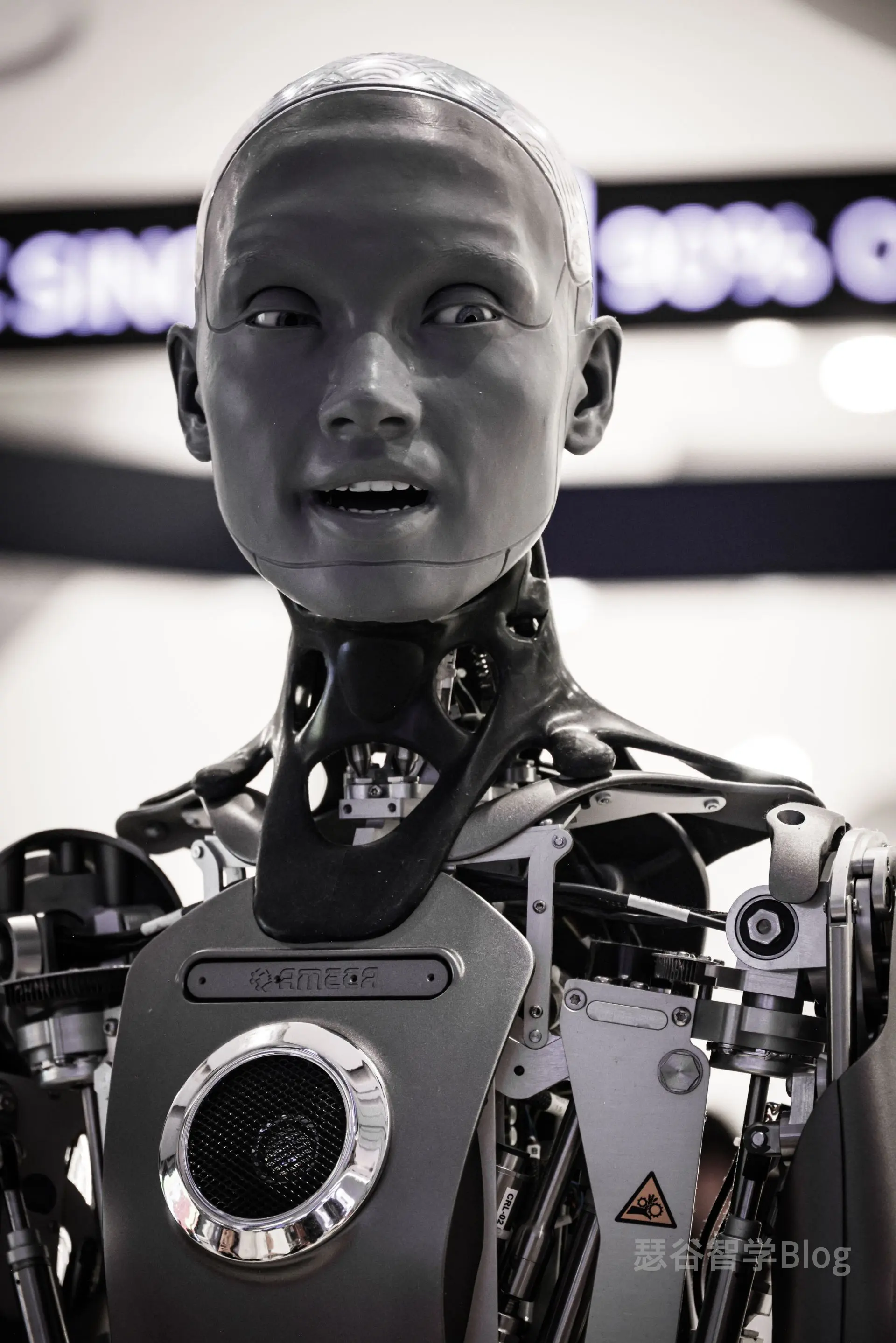
【深度访谈系列】AI时代狂想曲——我们可能是最后一代需要动脑的人
访谈围绕著名未来学家、投资人拉斯·特维德(Lars Tvede)的核心观点展开,以其著作《超级趋势》(Supertrends)为理论基础,从经济结构、地缘政治、生命健康、投资策略、青年成长五个维度全面推演未来20至30年的世界演变路径。
一、宏观经济版图:2050年的三个世界与“人机分工”
拉斯·特维德认为,未来的世界经济不会均质化发展,而是分化为三大平行的经济空间,并伴随“超智能经济”与“热情经济”的双轨并行。
1. 2050年三大经济形态
双轨经济与流动模式:
超智能经济(Hyper-Intelligent Economy)与热情经济(Passion Economy)并存。追求热情经济的人大多定居于慢速区,创新极客聚集在超级集群。
新型穿梭生活:部分顶尖从业者(如量子计算专家)可在超级集群工作,通过电动垂直起降飞行器(eVTOL)通勤,白天从事尖端研发,夜间返回慢速区生活。
2. 人类与机器的新分工:颠覆“狼与狗”隐喻
破除两大认知误区:
关于判断力:外界常认为“人类具备不可替代的终极决断力”,但事实上机器最终在几乎所有领域都能做出远超人类的高维精准判断。
关于创造力:机器目前已展现出极其强大的创造力,未来还将以指数级(数个数量级)提升。
“人是未来的宠物狗”:
人类不是圈养 AI 的驯化者,人类本身才是适应机器生态的“狗”。
演化逻辑:历史上野狼数量有限,但在人类干预与人工选择下,狗的数量远远超过了狼的祖先。金毛寻回犬之所以温顺友善,是因为人类替它们解决了生存竞争中粗暴、严酷的硬性难题(食物与防御),使它们有空间展现温顺,并因温顺获得奖励。
未来角色:机器负责所有刚性、困难、极度复杂的理性计算与体力硬任务;人类退居负责“柔软的部分”(文化、激情、目标感与精神探索)。人类社会将蓬勃发展,但转型过渡期必然伴随动荡。
二、地缘政治与 AI 竞局:短期看美国,长期压中国
中美 AI 终局的核心论断为:短期看美国,长期押中国。美国目前在顶尖前沿大模型(Frontier Models)上保持领先,但中国模型的迭代落差仅在“数周至数月”之间,技术差距极小,且中国在决定长期胜负的四大底层支柱上具备系统性优势。
            长期 AI 终局决定要素
 ┌─────────────────┬─────────────────┐
 │ 1. 芯片自主可控 │ 2. 模型+人才体系  │
 │ 3. 能源电网基建 │ 4. 具身智能+制造  │
 └─────────────────┴─────────────────┘
  ▲ 逆向催化剂:劳动力人口下降(自动化飞轮)
1. 芯片与硬件的自主替代路径
算力芯片是当前 AI 产业最大的核心瓶颈(美国的现存相对优势所在)。
自主化时间线:中国目前自给率约 40%–42%,国家战略目标明确;预计 2030年自给率达 70%,2035年基本实现 100% 自主化。届时将诞生与 ASML 全面抗衡的自主光刻设备,并在先进制程芯片、高速内存芯片(HBM)等领域补齐全部拼图。
2. “AI+”战略、开源生态与教育普及
应用落地战略:国家层面强力推行“AI+”战略,全面普及小语言模型(SLM)与智能体 AI(Agentic AI),并以开源模型(Open-source / Open-weight)为主攻方向。
体系化人才池:教育系统从 6岁 开始普及 AI 与编程教育,STEM 及工程技术教育在国家层面的优先级和集中度全球罕见(仅瑞士等极少数国家具有类似工程导向),形成超大规模的工程师工程消化能力。
3. 能源与超前电网基建
过去数年间,中国在电网系统与电力基础设施上的资本开支与建设规模超过了全球其他国家的总和。
该前瞻性布局极可能最初源于对电动汽车(EV)的扶持而非 AI,但客观上构筑了巨大的能源防线。反观美国,即便政府全力推动能源供给,权威预测显示美国在 2030年前后仍将面临大面积电力短缺。
4. 具身智能与制造业的绝对物理壁垒
物理 AI(Physical / Embodied AI):预测显示到 2050 年全球将有数百亿台具备超人智能的物理机器。
厂房体量差距:中国实际工业制造厂房面积约是美国的 20 倍、欧洲的 5 倍(欧洲制造业基础仍显著强于美国,而美国制造业空心化严重且极难重建)。中国在机械制造、装配工程及机器人研发上的迭代速度远超两年前。
5. 劳动力下滑的“因祸得福”(Blessing in Disguise)
严峻的人口红利消退倒逼出最强烈的自动化诉求。
明确的劳动力短缺威胁构成强大外部压力,迫使社会以最快速度铺设实体机器人与数字化 AI。
自动化自反馈闭环:当机器人开始组装机器人、AI 开始为 AI 编写底层代码,自动化的自繁殖飞轮将建立。这种超前重构将推动中国未来的国民生活水平远高于劳动力未曾缩减的情境。
三、健康与生命科学:长寿逃逸速度与时间的双重解放
健康科技不仅将重塑人口预期寿命,更将重定义“生命质量”与日常时间维度。
1. 长寿逃逸速度(Longevity Escape Velocity, LEV)
日历年龄(Chronological Age)vs 生物学年龄(Biological Age):通过科学干预大幅延缓生物学衰老过程。
临界点定义:当医疗科技进步的速度,达到每过去 1 个自然年,科学突破就能为人类平均预期寿命延展 1 年以上时,死亡将在时间维度上被持续推迟,人类第一次在生理上跑赢时间。
技术路径的双层跃迁:
常规层面:预防疾病、精准治愈重大致命恶疾(消灭外在致死因素)。
抗衰底层:直接破解细胞衰老本质机制,从源头阻断老化进程,实现机体不老。
落地确定性:未来 10 至 20 年内,医学领域将爆发确定性极高的一揽子突破。
2. 生理寿命(Lifespan)与健康寿命(Healthspan)的区别
单纯活到 150 岁毫无吸引力(无人希望在轮椅上被动维生 60 年)。
抗衰技术的核心是延长健康寿命(Healthspan):若生理寿命达到 150 岁,健康寿命可达 130 岁——人类在 130 岁高龄时,依然具备打网球、与朋友社交聚会的高质量机体机能。
3. AI 赋予人类的终极红利:时间
AI 带来的本质价值是“时间”,体现在两个维度:
宏观生命时间:大幅拉长生理与健康存活年限。
微观日常时间:由于机器接管了所有维持生存运转的必要琐事与繁重劳作,普通人得以从全职谋生中解脱,获得大量此前为零的自由时间,专注投入个人激情、人生价值与目的感的实现。
四、商业投资机会与资产配置:押注供给约束与超级周期
投资端应聚焦长期供需失衡的卖方市场,核心布局两大资产大类:
                    核心投资配置方向
           ┌───────────────┴───────────────┐
           ▼                               ▼
    【AI 供给侧资产】              【工业金属超级周期】
 · 算力芯片 / 高性能制造         · 铜 (Copper) / 铀 (Uranium)
 · 超大规模云厂商 (Hyperscalers) · 铝 (Aluminium) / 铅 (Lead)
 · 数据工厂及基础设施供应商      · 逻辑:16年开矿周期 vs 绿色/重整需求
1. AI 产业链:锁死“供给侧”(Supply Side)
市场格局:典型的供远小于求(Demand >> Supply),指数级需求增长在未来长期被供给瓶颈压制,供给受限状态至少持续到 2030年以后。
价值捕获点:
利润高度集中于供给侧:超级数据中心建设商(Hyperscalers)、数据工厂基建供应商、顶尖模型运营商,以及芯片制造商。
当前瓶颈在芯片,长期核心瓶颈将演化为能源/电力。
操作策略:逢大盘调整或出现回调(Dip)时积极建仓。
2. 工业金属:长达 20 年的超级周期
供给端极度脆弱:
过去 10 年全球矿企持续压缩资本开支、减少新矿投资,仅维持现有老矿残余产能开采。
超长扩产滞后:开辟一座全新铜矿从勘探到投产平均耗时 16年,无法应对突发需求。
爆发性需求增量:
绿色能源转型:光伏面板、风电机组、电动汽车均为金属高耗密集型产品(电动汽车自重大、耗铜及基础金属极高)。
欧洲军事重整(Rearmament):军工国防设施与装备更新带动海量金属需求。
AI 衍生的全球财富扩张:间接加速实体基础设施重构。
周期复盘与标的:
供需裂口需至少 10–15年 才能逐步弥合修复。
历史对照:2000–2008 年的大宗商品超级周期中,矿企股价普遍上涨 400%–600%。
核心金属池:铀(Uranium,核能核心)、铜(Copper,电气化基石)、铝(Aluminium)、铅(Lead)及其他工业金属。配置应注重广泛分散。
五、对年轻人的核心建议:认知定位与乐观行动
面对颠覆性技术冲击,年轻群体的行动指南涵盖认知、工具与心态三个层面:
深度自我认知,找准底层热情
利用互联网上高质量的专业心理与能力测试工具,客观评估个人性格特质、认知长板与核心兴趣。
在机器解决生存烦恼的未来,唯有明确自身的“热爱(Passion)”与“目标感(Purpose)”,才能在慢速区或热情经济中确立生存支点。
化 AI 为盟友(Friend, not Foe)
进阶路径:学习驾驭智能体 AI(Agentic AI),以此开发新型服务形态,甚至构建轻量化 AI 自动化企业。
基础路径:全面使用大语言模型(LLM)与各类应用,将个人所有既有工作流的生产效率推向极致。
彻底摒弃就业虚无主义与悲观情绪
岗位不会凭空消亡:未来依旧存在海量就业岗位,薪资回报更高,且工作内容会更加有趣、更贴近人性本质。
符合人类生物学特质:人类在大脑与机体构造上,本质上从来就不适合在工厂里日复一日从事机械、单调、重复的工作。机器取代重复劳动是将人类从生物学逆境中解救出来。
核心心态预设:带着过度恐惧与悲观进入未来是完全错误的策略——未来的真实模样将远比大部分人设想的更美好;即便你现在已经是个乐观主义者,未来的精彩程度依然会超越预期。
访谈逐字稿:
你对世界的未来有自己的猜测吗?我最近发现,低维度的人喜欢思考自身过去,中维度的人喜欢思考自身未来,而高维度的人在思考世界的未来。这位老哥给年轻人提供了一个高维度的参考答案,他的名字叫拉斯·特维德,而这些都是他写的书。在这个系列的上期,我们戴上了一顶他的思维帽子,叫“世界从未改变”,但拉斯还有另一顶帽子,叫“世界即将颠覆”。他对 AI、对健康有很多几乎极端的想法啊,让我听完大为震撼。20年后的世界会怎么对待年轻人呢?让我们分4块地来看看:经济结构、健康、地缘政治和投资机会。Welcome to the new world。本就如此。经济的形态决定了 AI 世界的赢家和输家。拉斯在《超级趋势》这本书里描绘了一张2050年的地图。站在山顶上,你会同时看到3个世界。This is one thing where my thinking also evolved when I was writing the book because at first I was thinking about how will the world economy be, and then I got to the point is which was there will be different economies, and and so I I divide them into the super clusters and the slow zones and the lost pockets. So the super clusters are this like Shanghai and Shenzhen, it's like Singapore, parts of Switzerland, the city of London, so on. It's frantic, you know, lots of innovation, people, you know, their adrenaline is flowing. But other people are not happy with that at all. That's not what they want. They want to live on a little farm on the countryside and see the flowers grow and talk with a cow called Flower and some sheep and so on. And it's very important that that we recognize that people are different and that in this frantic AI-driven and robot-driven economy, lots of people don't want to be in involved in that. They maybe they don't even want to see robots much, but they do want to live longer. They want better healthcare. They want cheaper stuff and so on. So they would like to have the benefits from this frantic technology evolution. But they have to recognize they're not going to be the ones who get rich from it because they're not making it, but they will be the ones who get access to the final products. And this, this is the slow zones. Yeah, gotcha. Yeah. So now we have, you know, the frantic places, the the super hubs, you know, where everything is happening. You have the slow zones, and then you have the lost pockets. So the lost pockets are the ones that just are completely outside of it, and it's it's a part of the economy where the ladder has been pulled up, so to speak. So if you take a poor African country, for instance, the ladder, the social ladder or the economic ladder for that is okay. So they can, you can put a factory, somebody from China or Europe or America can put a factory there because the salaries are low. But then when they work in a salary, they learn some skills and then after a while they deploy the skills in their own companies and so on. Essentially cheap labor in manufacturing. Yeah, it's cheap labor. Yeah. And the issue is that the cheapest labor will end up being robots, so you will have these places that are left behind. So, so I I think it's really the easiest way to describe a realistic outcome is that we will have these three kinds of economy. And when I say that we'll have a passion economy, what I really mean is that we'll have two economies in par in parallel. We'll have the hyper intelligent economy and the passion economy. And many of the people who are really into the passion economy will live in a slow zone. I see. Yeah, yeah. And the people who are really into innovation will live in these frantic clusters. But there are also some people who will work in the frantic clusters. But then they will take their vertical takeoff and landing aircraft and fly to the slow zones and wake up on the countryside while they're still working on quantum computing or whatever. In this discussion, I think it's very important also to be fully aware of the capabilities that machines are going to have. So sometimes, quite often, you hear people saying that we we are still needed for judgment. Machines are not creative. Yeah. Have you heard that before? Yeah, I don't think that's correct. So first of all, I think machines in virtually any field eventually can make better judgments than humans. And second, I think that machines are already incredibly creative and they will just be become orders of magnitude more creative. So it's not about that. It's not about that they eventually are superior to us in any particular way. It's just that we we can build culture and passion and purpose and find lots and lots of things to do there. Think about wolves and dogs. Today there are not many wolves in the world, but the the wolves got got turned into dogs by humans through selective breeding, and there are actually far more dogs today than there ever were wolves. So yeah, so the sum of it is I think that that humans will thrive, but the transition to it will of course be turbulent. If I were to just make sure I capture the analogy fully, we are the dogs in the scenario that you just described, right? So we will be the dogs of the future, or are we raising AI as dogs? We, yeah, so it is that we are the dogs of the future. Yeah, people should get that wrong. But dogs dogs are adapted to humans, and and humans will adapt to machines, and that means that because machines do the hard parts, we can do the soft parts. So a golden retriever is much more gentle than a wolf, because it it can afford to be more gentle. It actually gets rewarded from being gentle. 那么把镜头拉远,国家和国家之间,谁又能赢下 AI 这一局呢?拉斯的答案给得很直接:短期看美国,长期压中国。 We obviously know that AI is a heavily geopolitical topic, and there is a lot of competition between US and China, right? We talked a bit about incentives, but what factors do you think generally determines which country wins out the AI race? And maybe can I ask you to to rate China on some of the factors that you've mentioned? Let's say on a scale of one to ten. Okay, so summarize. So America is leading on frontier models, but Chinese models are instead of being a year behind, they're more like weeks or months behind. I would say very, very close, and will surely, in different ways, overtake the Americans very soon. And here are my reasons. First of all, the biggest bottleneck right now in AI is chips, and that's one of the reasons that the US has advantage. China right now produces about forty percent or forty-two percent of its AI chips. China has clearly a strategy to become completely self-sufficient in AI chips. Prediction is that it will be seventy percent of the AI chips by twenty thirty, and then you can just run the the trend forward and say by twenty thirty five it's probably a hundred percent. So it will it will have a complete competitor to ASML, the machines that make you know the foundation of all chip manufacturing. It will be able to make Huan Day and and another who will be able to make leading edge chips will have high speed memory chips. It will have everything by then. But there are two more things. So first of all, the AI plus strategy in China of spreading AI, getting AI out in society, and promoting that with open, open model, open weight or open source model. Yeah, yeah. That the combination of really wanting people to adopt small language models and agency AI and having an education system that from your six years old prioritise AI and where technical educations are more prioritised than in almost any other nation. I just think Switzerland has a lot of tech education also. But so you have you will have open models. You will have lots of people who have the education to take those models. And the third advantage is power. Yes. Yeah. So over the last few years, China has invested more in grid, electric power system, than all the rest combined. I haven't asked an AI why China started building out electricity system before AI became a thing. Maybe we should do that afterwards. So my suspicion is it was because of electric cars, and not because of AI. But whether it was because also of AI, I don't know. But in retrospect, it was a fantastic move. It was really, it was really smart to do that. And if you look at predictions for the US, even though the, I mean Donald Trump's administration is doing everything they can to provide more energy, the predictions are still that by 20, 20, 30, I think it is, they will have a massive shortage of energy. So now I mentioned the education system, the open models, and the electricity.But this number four, and the number four is really, really big, and that's physical AI. So physical AI is, of course, also what you call embodied AI. It's AI inside physical machines. Areas, serious prediction you can read from major research institutions or well reputed investment banks and so on. Predict that by 2050 there will be billions of thinking machines, many of which will be more intelligent than humans. Even though the activities in physical AI, especially in America, China is so good at making machines. I saw these insane numbers that compared the square meters of production factories in China, US, and Europe. Yeah, unfortunately I cannot remember the name, but but the number I think China is twenty times as big as America, and it's actually, excuse me, but I'm a little bit off here. But I think maybe five times Europe. So Europe actually has a lot more manufacturing than America. And America? Yeah. So America has has has has become super weak on manufacturing, and they know it, and they are trying to fix it. But these things are not easy to fix. For sure. Yeah, but China has that, and so I mean, the Chinese robots are already amazing, and and and they're far far better than they were two years ago. So China is ready for that, and China also has something that could be a blessing in disguise, as you say, and that is rapidly, you know, the prediction of a rapidly falling workforce. The reason I say that is can be a blessing in disguise is that if you know that you will be short of labor in the future, that gives you a very strong incentive to automate and to deploy robots and and disembodied AI as fast as you can. Not all nations would understand that or would be able to do it, but China is doing it. But we know that when you feel that there's an there's a really strong incentive or a really big threat, you do things faster. You you you invest more in it, you improve it faster and so on. Being aware that the workforce will be a problem will make China automate much faster than it would otherwise do. But the automation takes its own life. The robots can build robots, the AI can code robots, AI. It's like you're sinking the ground for something that will become incredibly powerful by itself after that. And that means that the standard of living in China, because of this strange dynamic, might become much higher than it would if you didn't have a declining workforce. So yeah, so it it can actually be a blessing to have the declining workforce. Economic 版图重绘的同时,健康版图也在悄然改变。拉斯这次端上了一热词啊,叫长寿逃逸速度(longevity escape velocity)。当科技每年给你续上的命比你老去的还要多的时候,人类就第一次跑赢了时间。Do you mind explaining what longevity escape velocity means and what your thoughts on that? Like given you've mentioned health improvements. Yeah, so when you talk about how long time people live, you you talk about the chronological age. I mean, how many years old you are. But then scientists also have a term called your biological age. So there are different tests you can take, and then you say that you are actually biologically older or younger than your chronological age. This this this concept that was launched some some years ago, which is that with the use of science, are able to to slow down the biological aging enough. Then for every year we live, there will be so much scientific breakthrough that you can add a year to your expected lifetime. That means that even as you chronologically get older, you're not getting closer to death. Death keeps evading you because of new scientific breakthroughs. If we then dig into what it actually consists of, it consists of a number of different breakthroughs. And so let's start with the things that are more mundane. You could say that is preventing disease or curing disease. Yeah. So different things that removes what would normally kill you. But in anti-aging, you're you're talking about a completely different thing. You're talking about understanding the essence of what makes you age, and and then going in and preventing that thing from happening, so that you actually do not age anymore. What we can say with very high degree of certainty is that within next ten to twenty years there will be so many medical breakthroughs that people will have the ability to slow down their aging and extend their expected lifetime substantially. Here you have to distinguish between two different success measures. So lifespan is one. You know, let's say you can live to 150 years old, and then many people say, yeah, but I don't want to, because I don't want to sit in a wheelchair for 60 years. It's not good quality life, yeah. And that brings the second term in, which is health span. And if you are able to implement anti-aging technologies, then your health span will be very long. Also, so it is about getting as many healthy years that you as you can. So maybe if you have a 150 years lifespan, you may have 130 years health span, and that means when you are 130 years old, you can play tennis and and party with your friends and so on. So I think it's very likely that AI will bring us this, and this is something I write about in the book that I I I don't hear people talking about. I actually I personally haven't heard anybody talking about, and that is that the biggest benefit we can get for AI might be time, and the time comes in two forms. The the one is the one we just talked about. Yeah. You have a lot longer time to live your life, but the second thing is that during the normal week and the normal day, because machines will do so many things that are just essential for survival. You will have time to pursue your passions and your purpose, much more time than otherwise. And lots of people, I think, have no time, like zero time, to pursue passion and purpose. But it will give lots of people a lot more time for these things. 好,趋势聊到这儿,最实在的2个问题来了,钱该往哪放?普通人又到底该怎么办呢? Bringing back to investments, can you give us some sneak peeks on what your portfolio looks like right now, or what your investing strategy looks like? Yeah, so I am very positive on the AI business, so that's a part of my portfolio is very directly related to that. First of all, AI is a market where demand is much bigger than supply, which is a good thing if you are doing the supply. And I think it will be supply constrained at least past 2030, possibly much longer. Right now, supply is mainly hit back by lack of chips. In the longer term, it will also be lack of energy. The products are getting so much better so fast that they will disseminate into society. Demand will continue to grow exponentially. So, the money in the value chain is made in on the supply side, which as a whole is very profitable right now. And it consists of the hyperscalers and you know the data data factory suppliers and model operators on one side, and then the chip manufacturers on the other. So, yeah, so we are very invested in that. We had this nice dip, so we bought some more of that. Then another thing that I'm really, really bullish on in the longer term is industrial metals. So we talked about this long-term 20 years cycle in industrial metals. So the last ten years, the miners have actually reduced their production, which is completely unsustainable. It's completely out of whack with the prediction for for future demand. So we have future demand driven by renewables. You know, these are very, you know, solar panels and windmills, electric cars. They're all very heavy machines. Electric cars are very heavy because there's a lot of metal in them, but also by reammonds, especially in Europe, also by the acceleration in global wealth that AI will create. And it takes on average around 16 years to open a new copper mine, for instance. So what what they have done is they're squeezing the last bits out of many of the mines, but not really opening new mines. Interesting. So it's a consensus prediction is that we will have a shortage of a number of industrial metals over the coming few years, and that will take at least ten years to get out of that, and possibly fifteen. And last time we had one of these cycles was from 2000 to 2008, and there you saw mining companies go up typically four to six hundred percent. And so they have gone up some, but I think there's a lot more in it. So this is long time and long term, and you have to be diversified. Of course, yeah. There will be extreme shortages of uranium as it looks, extreme shortages of copper, shortages of lead, of aluminium, but also a number of other metals. So I think it's really good to have. Fascinating stuff. No, thank you. That that makes a ton of sense. For my final question, I wanted to bring it back into something maybe a bit more personal. So, last for context, a lot of our audience are like relatively young people in China, right? Who are trying to navigate their lives, and I'm curious, like basically, how would how should a young person prepare for the the changes that we we have coming forward? But I'll give two two pieces of advice. The first one is to get to know yourself. You can take a lot of self tests on the internet, and so they actually typically on a very high standard, or at least some of them are. So take a number of self tests, try to find out who you really are, because from that you can find out what is your passion, what what would you really be happy doing. And the second one is to make AI your friend, not your foe, and that means learn to work with AI at some at some level. I mean, the most sophisticated levels surely will be that you're able to make agentic AI and create new services, even build companies with AI. And and the lesser level is you just use it to make whatever you're doing more efficient by using large language models and maybe some other applications. So these two, I think, none of that is particularly difficult, but I think they can make a big difference. But there's also something in the attitude that you know, don't assume that there's no jobs for humans in the future. There's most likely lots of jobs, and they will you will earn a higher income, but they will be more interesting and they will be closer to what most humans actually want to do. So I don't think humans mentally are made for working at a factory doing the same thing all the time. Well, maybe a few are, but we are we are we are mostly biological optimized for some other work, and it will become easier for us to do things that we really thrive with. So to go into the future super scared and pessimistic is not a good idea. The world will most likely be far better than you think. That is very reassuring. Even if you think it will be far better, it will still be far better than you think. That that's always a nice highlight to to end on. Okay. 好,那么这期视频到这里就结束了。感谢看到这里的狗蛋,感谢点赞支持的狗蛋,也感谢拉斯参与到本次的访谈之中。希望大家都可以做个复杂世界的清醒人。我们下期再见。